

+KESPORT!
- •Self-knowledge: Knowing oneself.
- •Empathy: Knowing how to put oneself in others' shoes.
- •Interpersonal relationships: How we relate to others.
- •Assertive communication: Saying what one wants to say, but saying it well.
- •Creative thinking: Seeking the maximum number of alternatives.
- •Decision making: Deciding what is best for us and others.
- •Critical thinking: Having one's own opinion.
- •Managing emotions and feelings: Control of one's own emotions.
- •Managing tension and stress: Control of stressful situations.
- •Problem and conflict resolution: Facing conflicts in the best way.
- •Teamwork: Together is better.
WHAT DOES THE CAMPAIGN CONSIST OF?
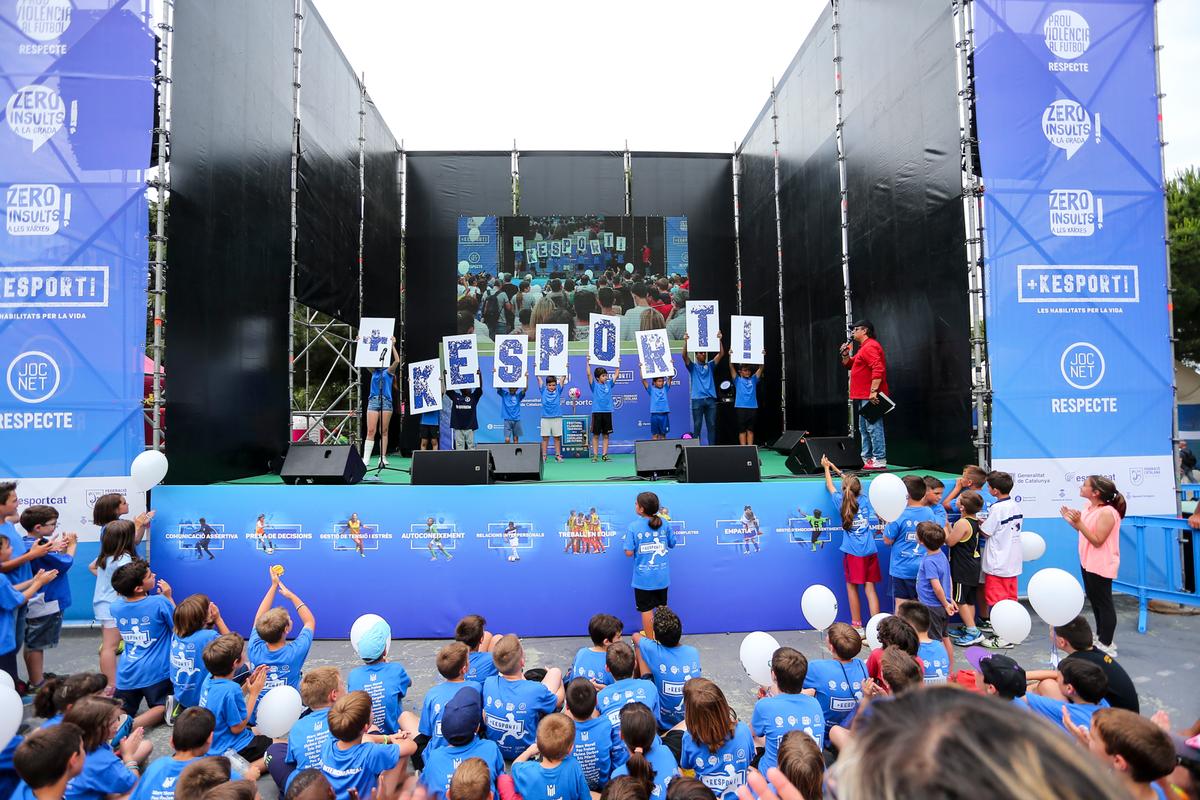
About fifteen specialized coaches have started working closely with approximately 500 coaches from nearly 450 teams so that 5,000 players improve and learn with a total of 10 life skills that the World Health Organization (WHO) defined in 1993 as a result of analyzing social, cultural, and family changes. The WHO concluded the need for learning interpersonal, cognitive, and emotion management skills beyond the family circle.
'+KESPORT!' develops the life skill, the ten identified by the WHO, and has added one more for teamwork so that there would be eleven, as many as a football team has players, the sport with the greatest educational force in the world. These are:
ELEMENTS THAT FORM PART OF IT:
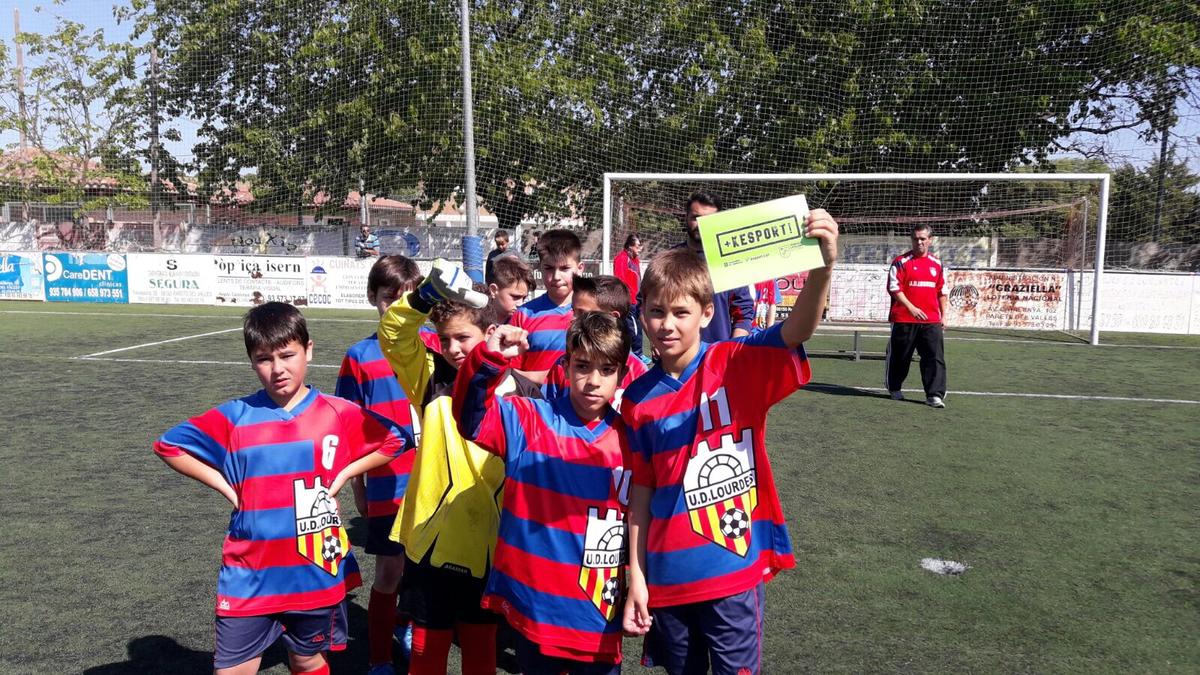
Each skill is worked on in 5 activities that are included in training sessions, including a football match with imaginative rules that '+KESPORT!' coaches reconcile with the coaches as an educational tool. A game with or without a ball accompanied by a common reflection with the players in just a few minutes and without altering the training program. '+KESPORT!' knows that teamwork will always improve footballers individually.
The associative potential of football is only one part of the program. The other great asset is the clubs themselves. The struggle of their directors to offer players facilities, coaches, medical assistance, kits, and means to train and play. They don't just practice sport; they also receive education, values and reinforce their learning as people thanks to the vocation of service of so many entities.
In grassroots football, the youngest discover other leaderships, new friendships, and very different emotions from those of their family environment. According to educators, football is a school of life where they learn and incorporate the value of being there in hard times and knowing how to accompany defeats, situations of decisive pedagogical effectiveness. That is why the figure of the coach is key, as a reference, authority of the team, and pillar of the implementation of '+KESPORT!'. In addition to helping players in their technical and tactical evolution of the game, they can polish their life skills, those that the program subscribes as basic to improve as people and to be able to relate properly with their environment.
For '+KESPORT!', players are potential agents of change within their family nucleus. Therefore, one of the objectives of the project also involves generating an interaction that improves and amends the conduct and behavior of parents on football fields.
REGULATORY MODIFICATIONS:
- •Definition as training categories those corresponding to 7-a-side football (art. 8 of the Statutes).
- •Creation of the Mediation and Arbitration Commission (art. 67 of the Statutes).
- •Promoting mandatory participation in training categories (art. 218 of the RG).
- •Toughening of sanctions for infractions related to the adulteration of match results (art. 225, 293, and 294 of the RG).
- •Introduction of restorative justice in the sports field with mandatory accompaniment of sanctioned players (art. 342 bis of the RG).
- •Reduction to one season of the commitments of footballers with clubs in formative categories (art. 138, 139, and 140 RG).
- •Limitation of the displacement distance between the place of residence and the club's sports facility for Benjamins and lower categories (art. 140 RG).
- •Requirement of more training for technicians in more categories, especially grassroots football (transitory provision RG).